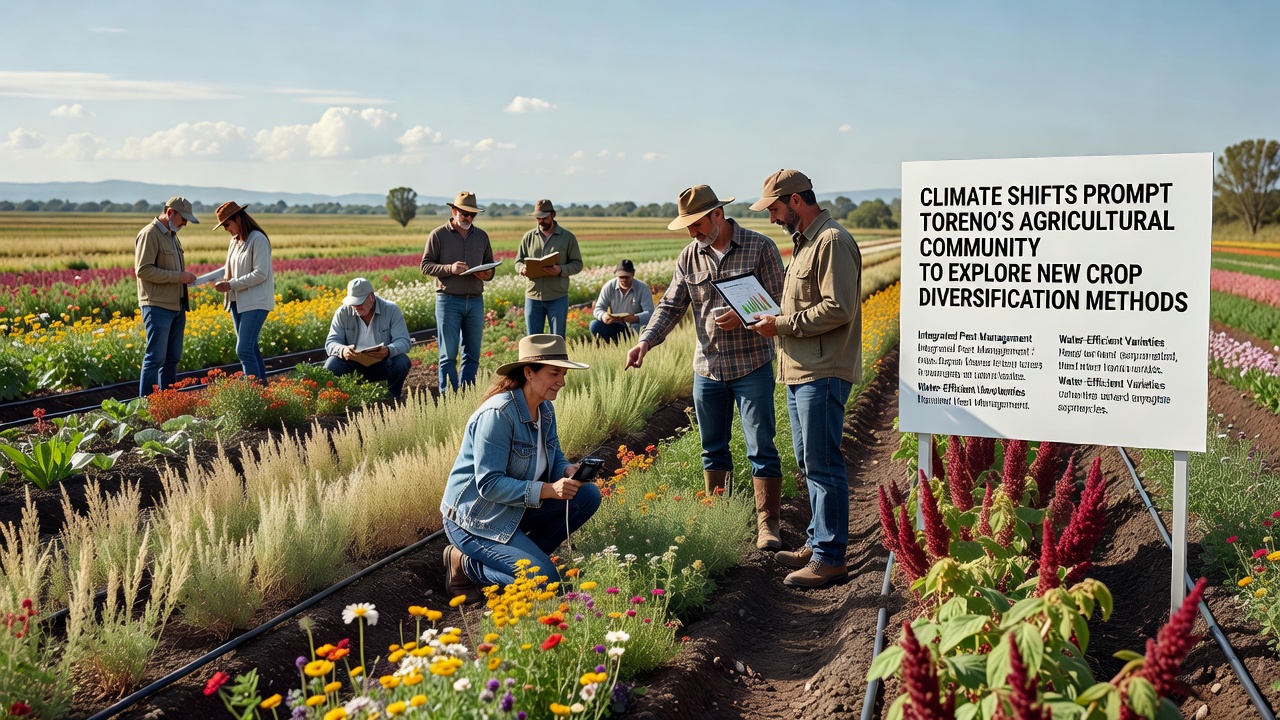
Nils Lang · 21 October 2026
Agricultural Shifts in Toreno Reflect Broader Climate Trends in Crop Selection
Climate data collected across the Toreno region through October 2026 shows rising average temperatures combined with irregular rainfall patterns that have altered traditional growing cycles for several staple crops. Local agricultural records indicate that wheat and olive yields have fluctuated more sharply in the past five seasons than in previous decades, prompting growers to test alternative varieties suited to warmer and drier conditions. Researchers from regional universities have tracked soil moisture levels and documented how extended dry spells now occur more frequently during critical planting windows.
Observed Changes in Local Weather Patterns
Meteorological stations maintained by the European Environment Agency recorded that Toreno experienced 18 percent less spring rainfall in 2025 compared with the 1990-2010 baseline, while summer heatwaves lasted an average of four additional days. These figures align with broader Mediterranean climate projections released by the same agency, which link such shifts to increased evapotranspiration rates that stress conventional row crops. Farmers in the area have noted that grapes and tomatoes now require supplemental irrigation earlier in the season, raising operational costs for those relying on older water management systems.
Soil scientists working with the Toreno agricultural cooperative compiled field samples in early 2026 and found measurable declines in organic matter content on plots that had supported continuous monoculture for more than twenty years. The same study connected these changes to higher daytime temperatures that accelerate decomposition rates without corresponding increases in biomass input from cover crops. As a result, several estates began incorporating legumes and deep-rooted forage species to rebuild soil structure while diversifying income streams.
Introduction of Alternative Crop Varieties
Extension agents affiliated with the Italian Ministry of Agriculture have distributed seed trials for drought-tolerant sorghum, quinoa, and perennial grains since spring 2025. Early harvest data from participating farms show that certain sorghum hybrids maintained yields above 3.2 tons per hectare under 2026 rainfall totals that reduced neighboring wheat output by nearly one quarter. Growers also report success with fig and pomegranate orchards on south-facing slopes where olive trees have shown increased susceptibility to pests during prolonged warm periods.
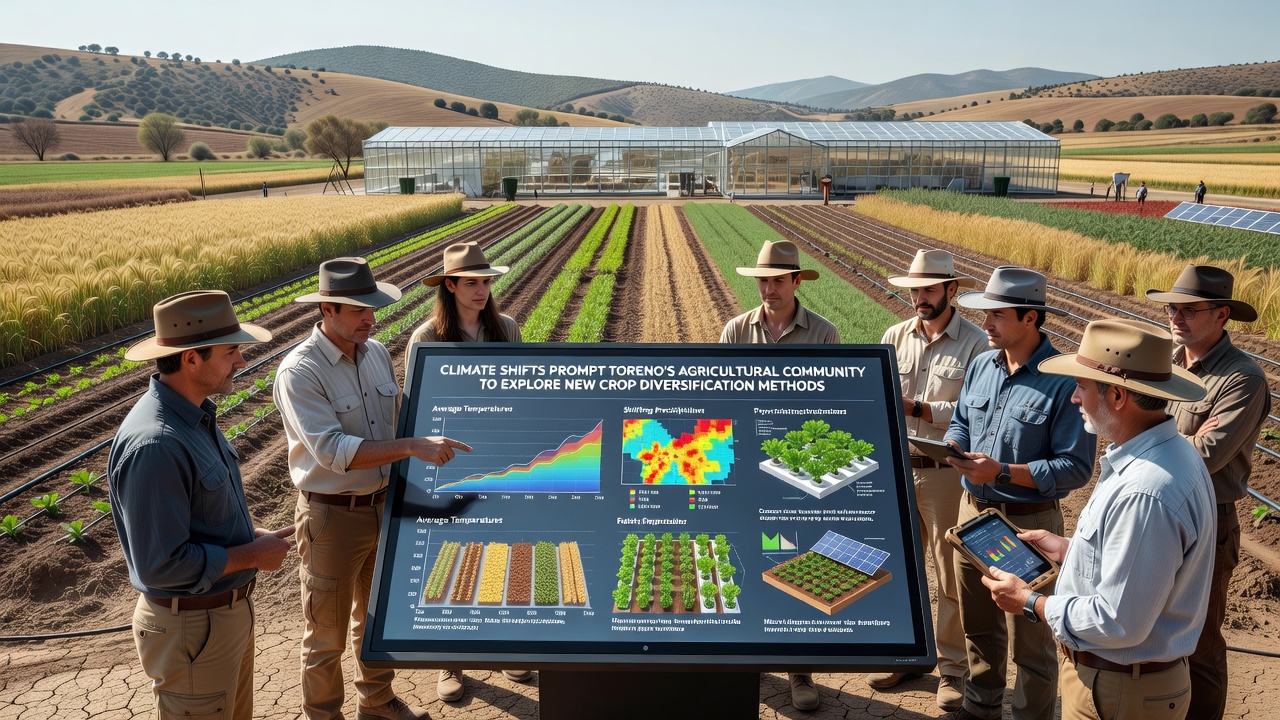
Community meetings held in September 2026 highlighted additional interest in medicinal herbs and specialty greens that command higher market prices while using less water overall. One cooperative near the eastern hills documented a 15 percent revenue increase after allocating 8 hectares to lavender and rosemary rotations that also improved pollinator habitat. These transitions follow patterns observed in similar Mediterranean zones where producers have gradually replaced portions of traditional acreage with higher-value, climate-resilient options.
Techniques Supporting Diversification Efforts
Many operations now combine precision irrigation with sensor networks that monitor root-zone moisture in real time, allowing targeted water delivery only where needed. The Toreno regional authority has funded pilot programs that pair these systems with variable-rate fertilizer applicators, reducing nutrient runoff during heavier autumn storms. Agronomists note that intercropping strategies, such as planting beans between young fruit trees, further stabilize soil temperatures and suppress weeds without additional chemical inputs.
Training sessions organized by the local farmers union in October 2026 introduced participants to cover-crop mixes that include vetch and clover to fix nitrogen during the off-season. Participants received access to shared equipment for no-till seeding, which preserves soil aggregates and reduces erosion risk during intense rainfall events. Data collected from these demonstration plots will feed into a multi-year database managed by the University of Turin to refine recommendations for the broader region.
Challenges and Ongoing Adjustments
Market infrastructure for new crops remains limited, with some producers facing longer transport distances to reach buyers familiar with quinoa or specialty herbs. Credit programs administered through agricultural banks have begun offering lower-interest loans for diversification projects that meet verified sustainability criteria, yet uptake varies depending on farm size and existing debt levels. Observers note that smaller holdings often require collective purchasing agreements to secure favorable seed and equipment pricing.
Continued monitoring through 2027 will determine whether these initial shifts produce stable long-term outcomes under evolving climate conditions. Regional authorities plan to release updated soil and yield maps by the end of the current fiscal year, providing growers with clearer benchmarks for future planting decisions.
Conclusion
Records compiled through October 2026 illustrate how Toreno's agricultural sector continues to respond to measurable climate shifts by testing new crops and management practices. The combination of field data, institutional support, and producer-led experimentation supplies concrete examples of adaptation already underway across multiple farm types and scales. Further documentation of results will help refine strategies that balance productivity with resource constraints in the years ahead.