Jonas Carter · 7 October 2026
Toreno's Roman Artifacts Spark Fresh Interest Among Young Local Creators Experimenting with Traditional Techniques
Recent excavations around Toreno have uncovered Roman-era pottery, mosaics, and tools that continue to draw attention from local artisans, and these finds align with a broader surge in hands-on experimentation among younger residents who adapt ancient methods to contemporary projects. Data from regional heritage records shows multiple sites yielded fragments dating between the first and third centuries CE, including stamped amphorae and tesserae that preserve clues about production processes used in the area centuries ago.
Archaeological Context and Recent Finds
Survey teams operating under the oversight of Italian cultural authorities documented layers of settlement that include workshops once dedicated to ceramics and stonework, while geophysical scans revealed kiln remains and pigment residues that match known Roman recipes for glazes and mortars. Young creators have accessed these materials through supervised study programs, which allow them to replicate firing temperatures and laying patterns without disturbing protected strata. Figures released by the Italian Ministry of Culture indicate that Toreno contributed over 200 catalogued pieces to national inventories during the past decade, providing a steady reference collection for apprentices who test wheel-throwing and mosaic setting under guidance from experienced restorers.
Traditional Techniques in Modern Practice
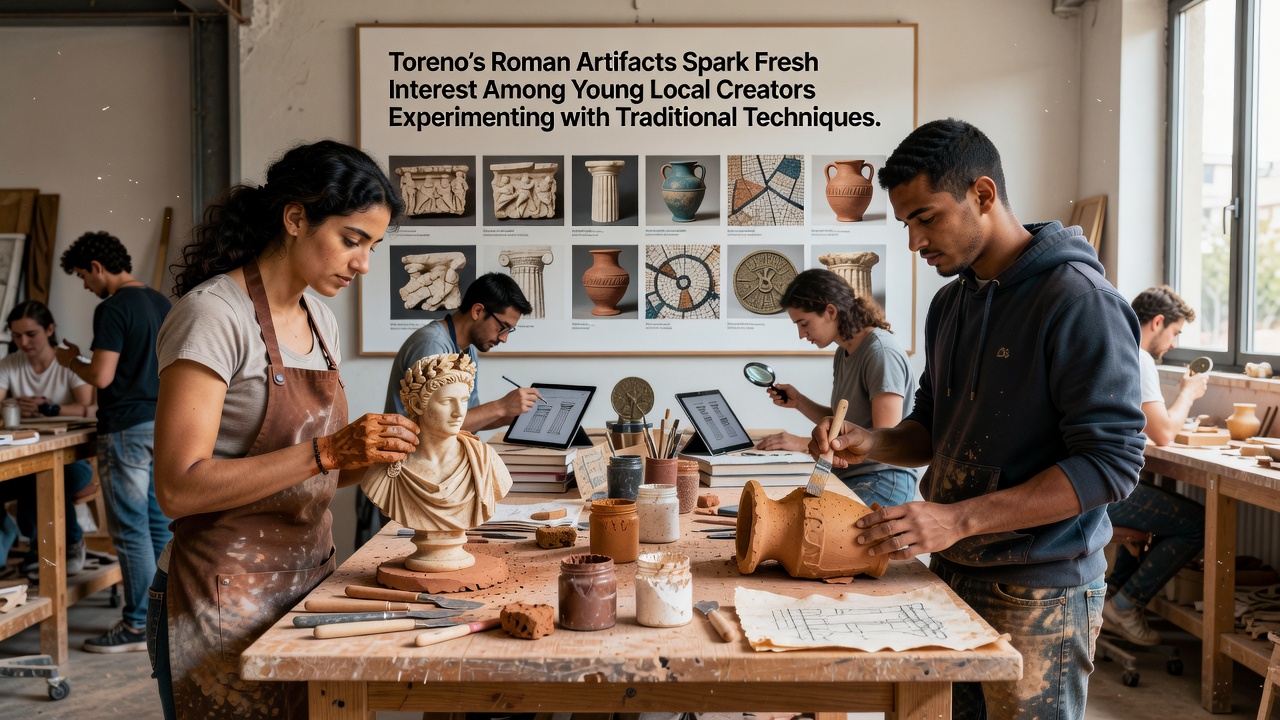
Local workshops now host sessions where participants grind pigments from the same mineral sources identified in Roman strata, mix lime-based mortars according to ratios preserved in period texts, and assemble tesserae into panels that echo floor designs recovered from nearby villas. Training records from the Toreno artisan guild list more than 150 participants under age thirty who completed modules on these methods between 2024 and 2026, with many incorporating the skills into jewelry, tableware, and small-scale architectural accents. Observers note that the availability of original shards for comparative study has accelerated the learning curve, because direct measurement of thickness, curvature, and surface texture reduces trial-and-error time during replication.
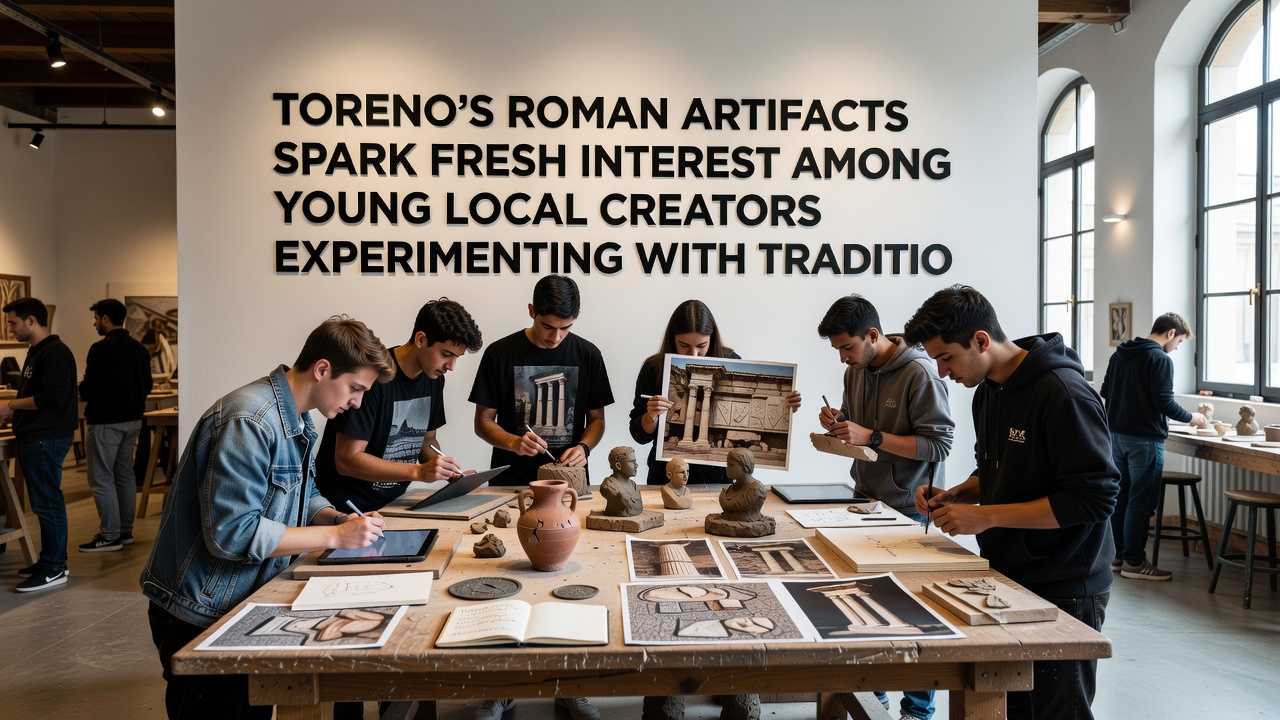
Equipment inventories at community studios list electric kilns calibrated to match the 900-to-1100-degree ranges documented in excavated remains, along with hand tools modeled on bronze and iron examples from the same contexts. Participants report that adjusting for modern clay bodies requires iterative testing, yet the core sequences of wedging, forming, and burnishing remain consistent with those inferred from tool marks on ancient sherds. A 2025 report prepared by the University of Bologna's Department of Cultural Heritage documented similar adaptation patterns across several Italian municipalities, confirming that access to primary artifacts correlates with higher retention rates in traditional craft courses.
October 2026 Programming adn Community Involvement
October 2026 programming includes a two-week intensive at the Toreno cultural center that pairs artifact viewing with live demonstrations of Roman coiling and inlay methods, and registration data shows 78 applicants from the surrounding region enrolled within the first week of announcements. Sessions incorporate comparative analysis of original fragments against newly fired replicas, allowing participants to adjust slip consistency and firing schedules in real time. Heritage organizations from the European Union have supplied portable spectrometers for on-site material identification, enabling creators to verify that their pigment mixes align with those recovered from the original deposits without relying solely on visual matching.
Local businesses supply raw materials such as specific limestone aggregates and iron-rich clays sourced from quarries identified in archaeological surveys, which ensures continuity between ancient supply chains and present-day production. Attendance logs from prior events indicate that repeat participants often progress from basic replication to original designs that integrate Roman proportions with current functional requirements, such as heat-resistant tiles for contemporary kitchens or modular wall panels for interior renovations.
Skill Transmission and Resource Networks
Apprenticeship pairings connect emerging creators with master artisans who maintain private collections of reference pieces, and guild minutes record that twelve new mentor relationships formed during the 2025 season alone. Online repositories hosted by the Canadian Conservation Institute provide open-access datasets on Roman ceramic petrography that Toreno residents cross-reference with local finds, supplementing on-site instruction with quantitative grain-size measurements and thermal expansion coefficients. These combined resources reduce the time required to achieve consistent results, because creators can anticipate shrinkage rates and color shifts before committing materials to full-scale pieces.
Community exhibitions scheduled for late October 2026 will display both excavated originals and student work side by side, allowing direct visual comparison of surface finishes and structural details. Organizers have secured temporary loans from the National Archaeological Museum in Naples to expand the range of reference objects available during the event, further supporting the transfer of techniques across generations.
Conclusion
The convergence of documented Roman artifacts, structured training opportunities, and accessible analytical tools has established a measurable pathway for young Toreno creators to engage with historical production methods. Continued cataloguing of finds and expansion of workshop capacity will determine how widely these practices disseminate in coming seasons, with current enrollment trends and material sourcing agreements providing the baseline for tracking participation growth.